|
||||
News
|
||||
NACA is collaborating with many regional partners to develop better management practices (BMPs) for small-scale aquaculture systems. Simple changes in management practices can help farmers to improve their profitability by increasing resource use efficiency, while reducing environmental impact at the same time. The BMP section of the website aims to facilitate exchange of knowledge on better management practices in aquaculture, particularly approaches suitable for small-scale farmers. Contributions to the site are welcome.
Driven by concerns about sustainability, many governments, NGOs and private sector organisations all over the world are developing aquaculture production standards and certification systems. NACA and FAO have initiated a consultative process to develop international guidelines for the development of aquaculture certification schemes to facilitate harmonisation. The Aquaculture Certification section of this site provides an opportunity for stakeholders to share experiences, reports and actively engage actively in the debate on aquaculture certification and build consensus.
Certification of aquaculture societies
The formation of collaborative aquaculture societies has allowed small producers to have a louder voice in negotiating prices for farm inputs as well as sale of farm produce and facilitated organised marketing. It has also increased farmer awareness of and ability to respond to the increasing demand for food safety and quality, traceability, social equity and environmental performance. Certification is seen as a tool of communication between producers and international consumers in this direction.
Mangroves are under threat in many parts of the world and the total area of mangrove forest is in decline, despite improvements in awareness of the importance of mangrove resources. The Mangrove Project aims to improve understanding of mangrove ecosystems, communities and conflicts and to develop knowledge-based approaches to reconcile the multiple demands on mangroves and adjacent coastal zones in South East Asia. It is a collaboration between seven partner organizations from six countries.
This project aims to strengthen the adaptive capacities of rural farming communities to the impacts of climate change. The project focuses on small-scale aquaculture and related sectors that are comprised largely of poor people who depend on aquatic resources for their livelihoods. The project is working in five countries: Indonesia, India, Thailand, Vietnam, the Philippines and Nepal.
Open water aquaculture often starts with insufficient knowledge of the trade-offs between natural resources and the culture based production. The resulting degradation and loss of resilience of aquatic natural resources affects livelihoods, coastal productivity and biodiversity. The RESCOPAR project is developing multi-disciplinary approaches to assess and manage resilience, to address resource degradation associated with mangrove ecosystems in four Asian countries.
Reducing the dependence on the utilisation of trash fish as feed for aquaculture of marine finfish in the Asian region (Updated 24/8/2010)
This technical cooperation project aims to investigate the perception of small-scale marine fish farmers that trash fish performs better as a food source than compounded feeds. Often cited, this premise has not been rigorously and independently tested in the field. The project will facilitate a transition away from dependence on trash fish to more sustainable alternatives, contributing to the overall sustainability of the sector and the livelihoods of the many thousands of farmers involved throughout the Asian region.
Smallholder farmer capacity building in ASEAN (Updated 31/3/2010)
The project aims to raise awareness and capacity among small-scale ASEAN aquaculture farmers and assist them to become or remain competitive in markets, in line with the ASEAN vision. It will assist ASEAN small-scale farmers to improve their organisation and livelihoods by improving their farm management practices to deliver quality and sustainably produced aquaculture products that meet the requirements of international markets. Farmers will be assisted to develop and implement better management practices to improve farm efficiency.
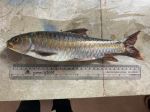
Molecular genetics of the rohu, Labeo rohita
The objective of the study is to investigate genetic issues relevant to the aquaculture, stock enhancement and fisheries management of rohu. The project aims to improve broodstock management practices at the hatchery level, support fisheries management and inform policy development on the translocation of seed for aquaculture and/or stock enhancement. These objectives will be addressed through five inter-linked molecular genetic studies. A study of the phylogenetic relationships between Labeo spp. will also be conducted.
Development of Better Management Practices for Marine Finfish Aquaculture in the Asia-Pacific Region
Marine finfish aquaculture provides an important livelihood option for poor coastal fishing communities in some parts of southeast and east Asia. The sector has been criticized by many for contributing to environmental problems such as coral reef destruction, high nutrient loadings and use of 'trash' fish as feed. There is an urgent need to encourage better management practices that will ensure the economic and environmental sustainability of small-scale farmers.
Development of Better Management Practices for Catfish Aquaculture in the Mekong Delta, Vietnam (Updated 24/8/2010)
Catfish farming in the Mekong Delta, the bulk of which is still undertaken by relatively small-scale producers, is one of the largest freshwater aquaculture industries in the world. The project aims to develop and facilitate adoption of BMPs for the catfish farming practices, implemented through groups of small-scale farmers, that will increase their efficacy and profitability while simultaneously reducing their risk profile and environmental impact, to ensure the wider sustainability of the sector.
The project will build on the ongoing shrimp BMP programs in the Asia-Pacific region (e.g. Australia, Indonesia, India, Vietnam and Thailand) and create a robust regional mechanism for networking and exchange of information. The project will specifically focus on BMPs to help small-scale shrimp farmers in Asia reduce disease risk, improve yields, produce quality shrimp, access markets, address socio-economic sustainability and comply with international principles.
Strategies for development of Asian reservoir and lake fisheries
The majority of reservoir fisheries in Asia are artisanal and provide livelihoods and nutrition for the rural poor. The project aims to identify national and regional R&D needs for effective utilisation of reservoirs and lakes for food fish production in participating countries and to develop capacity amongst fisheries and extension officers in management of reservoir fisheries.
| Forum | Topic | Replies | Views | Last Post |
|---|---|---|---|---|
| Website News and Feature Requests | New user registration suspended | 0 | 33 | 9/1 17:32:15 SimonWilkinson |
| Markets and trade | Looking for Marble Goby Fry | 1 | 503 | 8/18 23:59:36 sayarief |
| Markets and trade | How To Export International Nile Tilapia Fingerlings | 0 | 360 | 8/18 0:10:07 javogel |
| Markets and trade | Looking for Tilapia (niloticus) fry | 7 | 8666 | 8/17 23:38:58 javogel |
| Freshwater Fish Farming | Anyone know about Leptobarbus hoevenii (Jelawat) | 3 | 1671 | 8/16 18:13:12 fitriyusof |
| Job opportunities | Job at Songkhla Thailand | 0 | 463 | 8/13 17:28:37 talentgoldcoin |
| Shrimp Farming | Indian river prawn | 1 | 960 | 8/13 2:11:16 DrDVSNRAJU |